Total Pageviews

Monday, 2 May 2011

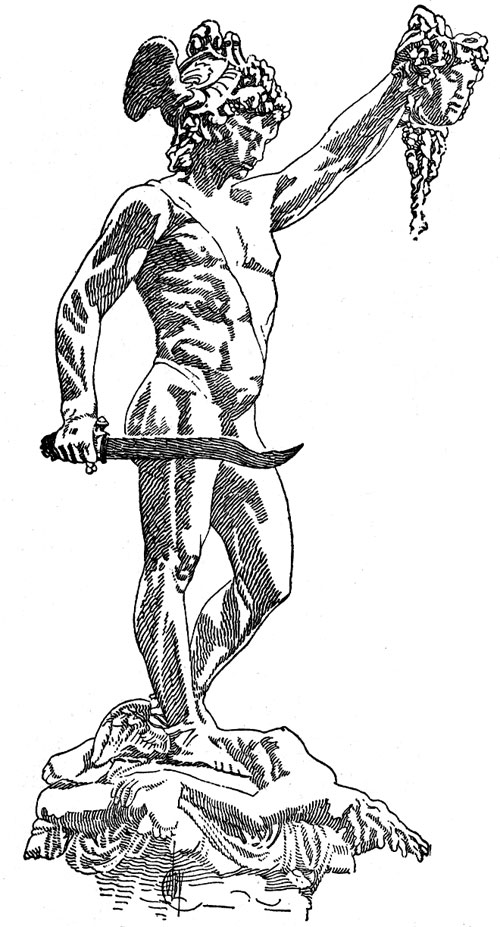
10 RITCHIE'S FABULAE FACILES TRANSLATION - PERSEUS 10 - POLYDECTES IS TURNED TO STONE with notes and interlinear translation

POLYDECTES IS TURNED TO STONE
a)
Postquam Perseus ad ínsulam návem appulit, sé ad locum contulit ubi máter ólim habitáverat, sed domum invénit vacuam et omnínó désertam. Trís diés per tótam ínsulam mátrem quaerébat; tandem quartó dié ad templum Diánae pervénit. Húc Danaé refúgerat, quod Polydectem timébat. Perseus ubi haec cógnóvit, írá mágná commótus est; ad régiam Polydectis sine morá contendit, et ubi eó vénit, statim in átrium inrúpit. Polydectés mágnó timóre adfectus est et fugere volébat. Dum tamen ille fugit, Perseus caput Medúsae mónstrávit; ille autem simul atque hóc vídit, in saxum versus est.

b)
 Below are some words selected for special consideration below. For the words not included in this list pease refer to the WORDLIST in PAGES TOP RIGHT SIDE BAR.

Appulit, perfect tense, 3rd person sing, of appello, -pellere, -pulí, -pulsus [ad + pelló], drive to, bring to; with or without návem, put in. It is translated here as 'had moored' rather than 'moored' which is pluperfect because it follows postquam. 
Contulit, perfect tense, 3rd person sing., of con-fero, cónferre, contulí, conlátus, bring together; grant, confer; sé cónferre, to betake oneself, make one's way, so means here ‘he made his way’.
quod, not the relative pronoun, but a conjunction meaning because.
eo, the adverb, in that place.
in atrium. Although inrupit means 'burst into,' the preposition is
nevertheless required with the noun to express the place into which he burst.
ille. See personal pronouns in ESENTIAL GRAMMAR NOTES, IN PAGES TOP RIGHT OF SIDE BAR.
Polydectes in Saxum versus est – accusative after in meaning into, Polydectes was turned into stone.
Dum, is followed by a present tense, so 'dum fugit' literally means 'while he flees' but would be translated with a past tense, so 'while he was fleeing'.

c)
Note: This section is not translated into idiomatic English but is intended, together with the notes, to give you the gist of the meaning; you can then come up with your own improved translation.

Postquam Perseus ad ínsulam návem appulit,
After Perseus had moored the boat at the island
sé ad locum contulit ubi máter
he took himself off to the place where his mother
ólim habitáverat, sed domum invénit vacuam
had once lived, but he found the house empty
et omnínó désertam. Trís diés per tótam ínsulam
and completely deserted.  For three days all through the island
mátrem quaerébat; tandem quartó dié
he was searching for his mother; at length on the fourth day
ad templum Diánae pervénit. Húc Danaé
he made his way to the temple of Diana. Here Danae
refúgerat, quod Polydectem timébat.
had taken refuge, because she feared Polydectes.
Perseus ubi haec cógnóvit, írá mágná commótus est;
Perseus when he found this out, felt great anger;
ad régiam Polydectis sine morá contendit,
without delay he hurried to Polydectes palace
et ubi eó vénit, statim in átrium inrúpit.
and when he arrived there, burst into the atrium at once.
Polydectés mágnó timóre adfectus est
Polydectes felt very afraid
et fugere volébat. Dum tamen ille fugit,
and wanted to flee. But as he was running away
Perseus caput Medúsae mónstrávit;
Perseus showed him the head of Medusa
ille autem simul atque hóc vídit,
but as soon as he saw it
in saxum versus est.
he was turned to stone.

d)This section is for you to copy and compose  your own translation.
Postquam Perseus ad insulam navem appulit,
se ad locum contulit ubi mater olim habitaverat,
sed domum invenit vacuam et omnino desertam.
Tris dies per totam insulam matrem quaerebat;
tandem quarto die ad templum Dianae pervenit.
Huc Danae refugerat, quod Polydectem timebat.
Perseus ubi haec cognovit, ira magna commotus est;
ad regiam Polydectis sine mora contendit,
et ubi eo venit, statim in atrium inrupit.
Polydectes magno timore adfectus est et fugere volebat.
Dum tamen ille fugit, Perseus caput Medusae monstravit;
ille autem simul atque hoc vidit, in saxum versus est.

Wednesday, 27 April 2011

09 RITCHIE'S FABULAE FACILES TRANSLATION - PERSEUS 09 - THE REWARD OF VALOUR with notes and interlinear translation

PERSEUS 09 - THE REWARD OF VALOUR

a)
Perseus postquam ad lítus déscendit, prímum tálária exuit; tum ad rúpem vénit ubi Andromeda vincta erat. Ea autem omnem spem salútis déposuerat, et ubi Perseus adiit, terróre paene exanimáta erat. Ille víncula statim solvit, et puellam patrí reddidit. Cépheus ob hanc rem máximó gaudió adfectus est. Meritam grátiam pró tantó benefició Perseó rettulit; praetereá Andromedam ipsam eí in mátrimónium dedit. Ille libenter hóc dónum accépit et puellam dúxit. Paucós annós cum uxóre suá in eá regióne habitábat, et in mágnó honóre erat apud omnís Aethiopés. Mágnopere tamen mátrem suam rúrsus vidére cupiébat. Tandem igitur cum uxóre suá é régnó Cépheí discessit.

b)Below are some words which have been selected for special attention. For the words not included in this list please refer to the WORDLIST in PAGES TOP RIGHT SIDE BAR.


Vincta erat – ‘was tied up, was bound, was chained’.
Ea - she pronoun. See is, ea, id in ESSENTIAL GRAMMAR NOTES in Pages, top of right side bar.
Salutis - notice that ‘is’ is not a long vowel and is therefore genitive meaning ‘of safety’; compare with ‘omnís’ which has the final ‘is’ accented as a long vowel and indicates that it is the alternative spelling of the accusative plural.
exanimata - used here as a predicate adjective which means it is joined to the subject of the sentence ‘ea’ meaning ‘she’ (Andromeda) by a form of the verb sum and therefore agrees with the subject.
Ille – personal pronoun meaning ‘that man’ or ‘he’. See ille, illa, illud ESSENTIAL GRAMMAR notes, top of right side bar. 
rettulit - 'To give thanks' or 'thank' is usually ‘gratias agere’, ‘gratiam referre’ means 'to show one's gratitude.'
praetereá - adv.conjunction, ‘besides this, besides, moreover’.
Ei - pronoun dative, to him. See is, ea, id in ESSENTIAL GRAMMAR top of right side bar.
duxit - This word came to mean 'marry,' because the bridegroom 'led' his bride in a wedding procession to his own home. It will be seen, therefore, that it can be used only of the man.
Paucos annos - For few years, accusative of duration of time.

c)Note: This section is not translated into idiomatic English but is intended, together with the notes, to give you the gist of the meaning; you can then come up with your own improved translation.


Perseus postquam ad lítus déscendit, Perseus after he had descended on to the shore,
prímum tálária exuit; tum ad rúpem vénitfirst took off his sandals, then he came to the rock
ubi Andromeda vincta erat.where Andromeda was tied up.
Ea autem omnem spem salútis déposuerat,She however had given up all hope of safety
et ubi Perseus adiit, and when Perseus approached,
terróre paene exanimáta erat.she almost fainted with terror.
Ille víncula statim solvit,He released her bonds at once
et puellam patrí reddidit.and returned the girl to her father.
Cépheus ob hanc remCepheus because of this
máximó gaudió adfectus est.was moved with great joy.
Meritam grátiam pró tantó beneficióDeserved gratitude for such great kindness
Perseó rettulit;he showed Perseus
praetereá Andromedam ipsam moreover Andromeda herself
eí in mátrimónium dedit.he gave to him in marriage.
Ille libenter hóc dónum accépitHe gladly accepted this gift
et puellam dúxit.and married the girl.
Paucós annós cum uxóre suáFor a few years with his wife
in eá regióne habitábat,he lived in this region,
et in mágnó honóre erat apud omnís Aethiopés.And he was held in great honour among all the Ethiopians.
Mágnopere tamen mátrem suam rúrsus vidére cupiébat.But he really wanted to see his mother again.
Tandem igitur cum uxóre suáAt length therefore with his wife
é régnó Cépheí discessit.he left the kingdom of Cepheus.


d)This section is for you to copy and compose your own translation.

Perseus postquam ad litus descendit,
primum talaria exuit;
tum ad rupem venit ubi Andromeda vincta erat.
Ea autem omnem spem salutis deposuerat,
et ubi Perseus adiit,
terrore paene exanimata erat.
Ille vincula statim solvit,
et puellam patri reddidit.
Cepheus ob hanc rem maximo gaudio adfectus est.
Meritam gratiam pro tanto beneficio Perseo rettulit;
praeterea Andromedam ipsam
ei in matrimonium dedit.
Ille libenter hoc donum accepit et puellam duxit.
Paucos annos cum uxore sua
in ea regione habitabat,
et in magno honore erat apud omnis Aethiopes.
Magnopere tamen
matrem suam rursus videre cupiebat.
Tandem igitur cum uxore sua e regno Cephei discessit.
 

Wednesday, 20 April 2011

08 RITCHIE FABULAE FACILES TRANSLATION - PERSEUS 08 - THE RESCUE

PERSEUS 08 - THE RESCUE with notes and interlinear translation


a)At Perseus ubi haec vídit, gladium suum édúxit, et postquam tálária induit, in áera sublátus est. Tum désuper in mónstrum impetum subitó fécit, et gladió suó collum éius graviter vulnerávit. Mónstrum ubi sénsit vulnus, fremitum horribilem édidit, et sine morá tótum corpus in aquam mersit. Perseus dum circum lítus volat, reditum éius exspectábat. Mare autem intereá undique sanguine ínficitur. Post breve tempus bélua rúrsus caput sustulit; mox tamen á Perseó íctú gravióre vulneráta est. Tum iterum sé in undás mersit, neque posteá vísa est.


b)  We have picked out some words for consideration below. For the words not included in this list please refer to the WORDLIST in PAGES TOP RIGHT SIDE BAR.

suum, eius - Remember to distinguish carefully between these words. ‘Suus’ is used of something belonging to the subject, ‘eius’ of something belonging to some other person or thing just mentioned. Gladium suum means ‘his sword’ i.e. belonging to the subject. Compare this with ‘Eius collum’ which means ‘his neck’, or ‘its neck’, meaning the monster’s; if Perseus had wounded ‘collum suum’ that would mean he had wounded his own neck.
sustulit. -  Notice that the perfect forms of ‘tollo’ are the same as those of ‘suffero (sub + fero)’, 'endure.'
desuper - from above
impetum fecit – ‘he charged’; ‘he made an attack’, from impetum facere.
Gladio suo - with his sword, the ablative case here is ablative of the instrument.
Edidit – ‘emitted, gave forth, let out’.
Reditum eius – ‘its return’, i.e. the monster’s return (see suum, eius above).
neque - here translated 'and ... not.' Neque is often used for ‘et non’.

c) Note: This section is not translated into idiomatic English but is intended, together with the notes, to give you the gist of the meaning; you can then come up with your own improved translation.


At Perseus ubi haec vídit, gladium suum édúxit,
But Perseus when he saw this, drew his sword
et postquam tálária induit, in áera sublátus est.
and after he put on his sandals, was carried up into the air.
Tum désuper in mónstrum impetum subitó fécit,
Then from above he suddenly charged the monster
et gladió suó collum éius graviter vulnerávit.
And with his sword seriously wounded its neck.
Mónstrum ubi sénsit vulnus, fremitum horribilem édidit,
The monster when it felt the wound, let out a horrible roar,
et sine morá tótum corpus in aquam mersit.
And without delay sunk its whole body into the water.
Perseus dum circum lítus volat, reditum éius exspectábat.
Perseus while he is flying around the shore was awaited its return.
Mare autem intereá undique sanguine ínficitur.
And the sea in the meantime is turning to blood in all directions.
Post breve tempus bélua rúrsus caput sustulit;
After a short time the sea monster again raised its head
mox tamen á Perseó íctú gravióre vulneráta est.
but soon by a more serious blow from Perseus it was wounded.
Tum iterum sé in undás mersit,
Then again it plunged itself into the waves,
neque posteá vísa est.
and afterwards was not it seen again.

d)This section is for you to copy and compose your own translation.
At Perseus ubi haec vidit, gladium suum eduxit,
et postquam talaria induit, in aera sublatus est.
Tum desuper in monstrum impetum subito fecit,
et gladio suo collum eius graviter vulneravit.
Monstrum ubi sensit vulnus,
fremitum horribilem edidit,
et sine mora totum corpus in aquam mersit.
Perseus dum circum litus volat,
reditum eius exspectabat.
Mare autem interea undique sanguine inficitur.
Post breve tempus belua rursus caput sustulit;
mox tamen a Perseo ictu graviore vulnerata est.
Tum iterum se in undas mersit, neque postea visa est.

Tuesday, 12 April 2011

07 RITCHIE'S FABULAE FACILES TRANSLATION - PERSEUS O7 A HUMAN SACRIFICE

PERSEUS O7 - A HUMAN SACRIFICE


a) Tum réx diem certam díxit et omnia parávit. Ubi ea diés vénit, Andromeda ad lítus déducta est, et in cónspectú omnium ad rúpem adligáta est. Omnés fátum éius déplórábant,  nec lacrimás tenébant. At subitó,  dum mónstrum exspectant, Perseus accurrit; et ubi lacrimás vídit, causam dolóris quaerit. Illí rem tótam expónunt et puellam démónstrant. Dum haec geruntur, fremitus terribilis audítur; simul mónstrum horribilí specié procul cónspicitur. Éius cónspectus timórem máximum omnibus iniécit. Mónstrum mágná celeritáte ad lítus contendit, iamque ad locum appropinquábat ubi puella stábat.

b)
  We have chosen some words for special consideration below. For the words not included in this list pease refer to the WORDLIST in PAGES TOP RIGHT SIDE BAR.
diem certam. The appointed day, certus is definite, unlike quodam ‘a certain’ which is indefinite. Dies is regularly masculine, but when used of an appointed day it is often feminine.
Omnia. 'all things,' 'everything,' or 'all.'
deplorabant, tenebant. They were lamenting, the imperfect tense is being used to set the scene in the past.
quaerit. This is an example of the historical present which is used sometimes in storytelling to make the action vivid. There are several instances of this storytelling device in this paragraph.
Dum haec geruntur, 'while this is going on.'
horribili. Here the adjective is made emphatic by being put before its noun.
omnibus, dative of indirect object after the compound verb (in+iacio). The literal meaning is 'threw into all' but is probably best translated by ‘inspired in all.’

c) Note: This section is not translated into idiomatic English but is intended, together with the notes, to give you the gist of the meaning; you can then come up with your own improved translation.  Don't forget that in storytelling we often use the present tense to make the action more exciting and dramatic but this is usually translated into the past tense in English.


Tum réx diem certam díxit
Then the king announced the appointed day
et omnia parávit.
and prepared everything.
Ubi ea diés vénit,
When that day arrived,
Andromeda ad lítus déducta est,
Andromeda was led to the shore
et in cónspectú omnium
and in sight of all
ad rúpem adligáta est.
she was tied to a rock.
Omnés fátum éius déplórábant,
Everyone was lamenting her fate
nec lacrimás tenébant.
nor were they holding back their tears.
At subitó, dum mónstrum exspectant,
But suddenly, whilst they were waiting for the monster,
Perseus accurrit;
Perseus runs up
et ubi lacrimás vídit,
And when he sees the tears,
causam dolóris quaerit.
he wants to know the reason for the grief.
Illí rem tótam expónunt
They tell him all about it
et puellam démónstrant.
and show him the girl.
Dum haec geruntur,
While this is going on,
fremitus terribilis audítur;
a terrible roar is heard;
simul mónstrum horribilí specié procul cónspicitur.
At the same time a monster of horrible appearance is spotted not far off.
Éius cónspectus timórem máximum omnibus iniécit.
At the sight of him everyone is inspired with the greatest fear.
Mónstrum mágná celeritáte ad lítus contendit,
The monster with great speed hurries to the shore,
iamque ad locum appropinquábat ubi puella stábat.
And was already getting near to the place where the girl was standing.


d) The following section is for you to copy and compose your own translation.
Tum rex diem certam dixit et omnia paravit.
Ubi ea dies venit, Andromeda ad litus deducta est,
et in conspectu omnium ad rupem adligata est.
Omnes fatum eius deplorabant,
nec lacrimas tenebant.
At subito, dum monstrum exspectant,
Perseus accurrit; et ubi lacrimas vidit,
causam doloris quaerit.
Illi rem totam exponunt et puellam demonstrant.
Dum haec geruntur, fremitus terribilis auditur;
simul monstrum horribili specie procul conspicitur.
Eius conspectus timorem maximum omnibus iniecit.
Monstrum magna celeritate ad litus contendit,
iamque ad locum appropinquabat ubi puella stabat.

Tuesday, 5 April 2011

06 RITCHIE'S FABULAE FACILES TRANSLATION, PERSEUS 06 - THE SEA-SERPENT WITH NOTES AND INTERLINEAR TRANSLATION

PERSEUS 06 - THE SEA-SERPENT


a)  Pictured below is Neptune who sent the sea-serpent to punish Cepheus.
Post haec Perseus in fínís Aethiopum vénit. Ibi Cépheus quídam illó tempore régnábat. Híc Neptúnum, maris deum, ólim offenderat; Neptúnus autem mónstrum saevissimum míserat. Hóc cottídié é marí veniébat et hominés dévorábat. Ob hanc causam pavor animós omnium occupáverat. Cépheus igitur óráculum deí Hammónis cónsuluit, atque á deó iússus est fíliam mónstró trádere. Éius autem fília, nomine Andromeda, virgó fórmósissima erat. Cépheus ubi haec audívit, mágnum dolórem percépit. Volébat tamen cívís suós é tantó perículó extrahere, atque ob eam causam imperáta Hammónis facere cónstituit.
b) We have picked out some words for special consideration below. For the words not included in this list please refer to the WORDLIST in PAGES TOP RIGHT SIDE BAR.

haec – these things literally, translated usually as simply ‘this’
in finis – into the territory.
illo tempore - At that time = ablative of time.
regnabat - Description of how things were, the state of things in past time, therefore imperfect tense.
Hic. -'he' Pronoun, masculine, nominative, he, this man, is the subject (see Grammar Notes) of offenderat ‘he had offended, given offence to, angered, vexed’ etc.
maris deum – lit of the sea the god i.e. god of the sea.
olim – ‘once, at one time, once upon a time’.
Saevissimum – superlative adj., most savage, extremely savage.
Hoc - Pronoun neuter nominative, ‘this’ as it stands for ‘monstrum’ it means ‘this monster’.
Veniebat -  ‘Used to come out of the sea’ etc. the imperfect is used to show customary or habitual action followed here by another imperfect devorabat – used to eat.
omnium - 'of all ' or 'of all.men', an adjective can be used as a noun.
oraculum dei Hammonis – the oracle of the god Hammon. It was believed in ancient times that the will of the gods and a knowledge of the future events could be learned at certain shrines, of which the most famous were those of Apollo at Delphi, of Zeus or Jupiter at Dodona, and of Hammon in Egypt. Hammon was an Egyptian god, with the horns of a ram, but he was identified by the Greeks with Zeus and by the Romans with Jupiter.
filiam.- ‘his daughter’. Where there is no ambiguity, the possessive is often omitted in Latin.
autem – sometimes means ‘however’ and often introduces an explanation ('now').
nomine - 'by name.'
civis suos - 'his subjects.' Latin uses ‘suum, etc.’ for his when the the ‘his’ refers to the subject of the sentence, ‘his (own) citizens’. ‘His’ in Eius (autem) filia earlier in the passage ‘now his daughter ... was ..’ does not refer to the subject of the sentence, Andromeda is the subject of erat.  
c) Note: This section is not translated into idiomatic English but is intended, together with the notes, to give you the gist of the meaning; you can then come up with your own improved translation.

Post haec Perseus in fínís Aethiopum vénit.
After this Perseus came to the territory of Ethiopians.
Ibi Cépheus quídam illó tempore régnábat.
Here at that time a certain Cepheus was ruler.
Híc Neptúnum, maris deum, ólim offenderat;
This man had once offended Neptune, god of the sea,
Neptúnus autem mónstrum saevissimum míserat.
Neptune moreover had sent a savage monster.
Hóc cottídié é marí veniébat et hominés dévorábat.
This (monster) used to come out of the sea every day and eat men.
Ob hanc causam pavor animós omnium occupáverat.
For this reason fear filled the hearts of all.
Cépheus igitur óráculum deí Hammónis cónsuluit,
Cepheus therefore consulted the oracle of Hammon,
atque á deó iússus est fíliam mónstró trádere.
and he was told by the god to hand over his daughter to the monster.
Éius autem fília, nomine Andromeda,
Now his daughter, called Andromeda,
virgó fórmósissima erat. Cépheus ubi haec audívit,
was a very lovely girl. Cepheus when he heard this,
mágnum dolórem percépit. Volébat tamen
felt great grief. But he wanted to
cívís suós é tantó perículó extrahere,
get his citizens out of such great danger,
atque ob eam causam imperáta Hammónis facere cónstituit.
so for this reason he decided to do as Hammon ordered.

d) This section is for you to copy and compose your own translation..


Post haec Perseus in finis Aethiopum venit.
Ibi Cepheus quidam illo tempore regnabat.
Hic Neptunum, maris deum, olim offenderat;
Neptunus autem monstrum saevissimum miserat.
Hoc cottidie e mari veniebat et homines devorabat.
Ob hanc causam pavor animos omnium occupaverat.
Cepheus igitur oraculum dei Hammonis consuluit,
atque a deo iussus est filiam monstro tradere.
Eius autem filia, nomine Andromeda,
virgo formosissima erat.
Cepheus ubi haec audivit, magnum dolorem percepit.
Volebat tamen civis suos e tanto periculo extrahere,
atque ob eam causam
imperata Hammonis facere constituit.

Tuesday, 29 March 2011

05 RITCHIE'S FABULAE FACILES TRANSLATION, PERSEUS 05 THE GORGON'S HEAD WITH NOTES AND INTERLINEAR TRANSLATION

PERSEUS 05 - THE GORGON'S HEAD

 5. THE GORGON'S HEAD

a). Rés difficillima erat caput Gorgonis abscídere; éius enim cónspectú homines in saxum vertébantur.
Propter hanc causam Minerva speculum Perseó dederat.
Ille igitur tergum vertit, et in speculum ínspiciébat;
hóc modó ad locum vénit ubi Medúsa dormiébat.
Tum falce suá caput éius únó íctú abscídit.
Céterae Gorgonés statim é somnó excitátae sunt,
et ubi rem vídérunt, írá commótae sunt.
Arma rapuérunt, et Perseum occídere volébant.
Ille autem dum fugit, galeam magicam induit;
et ubi hóc fécit, statim é cónspectú eárum évásit.


b)  I have picked out some words for consideration below. For the words not included in this list pease refer to the WORDLIST in PAGES TOP RIGHT SIDE BAR.
Res. ‘It was a very difficult thing’ or more loosely, ‘it was by no means an easy thing’ etc. Res, is a difficult work to pin down: it can mean, the thing, the matter, the affair etc.
vertebantur. ‘They were turned’. This verb is imperfect passive plural. The imperfect here denotes customary action, what usually happens, which is one of its regular uses.
Propter. Propter is a preposition meaning ‘on account of’ and is followed by the accusative case.
Ille. He, pronoun.
hoc modo. In this way, ablative of manner.
dormiebat. ‘Was sleeping’ describes the state of things in past time.
fugit. When dum means 'while,' 'as,' it is followed by the present indicative, even when used of past events.
fecit. Like postquam, ubi has the present or perfect indicative, where English would use the pluperfect.


c). Note: This section is not translated into idiomatic English but is intended, together with the notes, to give you the gist of the meaning; you can then come up with your own improved translation.

Rés difficillima erat caput Gorgonis abscídere;
It was a very difficult matter to cut off the head of the Gorgon,
éius enim cónspectú homines in saxum vertébantur.
For on seeing it men were turned into stone.
Propter hanc causam Minerva speculum Perseó dederat.
For this reason, Minerva had given Perseus a mirror.
Ille igitur tergum vertit, et in speculum ínspiciébat;
He therefore turned his back and looked into the mirror;
hóc modó ad locum vénit ubi Medúsa dormiébat.
in this way he arrived at the place where Medusa was sleeping.
Tum falce suá caput éius únó íctú abscídit.
Then with his blade he cut off her head with one blow.
Céterae Gorgonés statim é somnó excitátae sunt,
The other Gorgons were roused from sleep immediately,
et ubi rem vídérunt, írá commótae sunt.
and when they saw what had happened, they were filled with anger.
Arma rapuérunt, et Perseum occídere volébant.
They seized their weapons and wanted to kill Perseus.
Ille autem dum fugit, galeam magicam induit;
He meanwhile is making his escape, he puts on the magic helmet
et ubi hóc fécit, statim é cónspectú eárum évásit.
And when he did this immediately he escaped out of their sight.

d) The following section is for you to copy and come up with your own translation.
Res difficillima erat caput Gorgonis abscidere;
eius enim conspectu homines in saxum vertebantur.
Propter hanc causam Minerva speculum Perseo dederat.
Ille igitur tergum vertit, et in speculum ínspiciebat;
hoc modo ad locum venit ubi Medusa dormiebat.
Tum falce sua caput eius uno ictu abscidit.
Ceterae Gorgones statim e somno excitatae sunt,
et ubi rem viderunt, ira commotae sunt.
Arma rapuerunt, et Perseum occidere volebant.
Ille autem dum fugit, galeam magicam induit;
et ubi hoc fecit, statim e conspectu earum evasit.

Tuesday, 22 March 2011

04 RITCHIE'S FABULAE FACILES TRANSLATION - PERSEUS - 04 PERSEUS GETS HIS OUTFIT WITH NOTES AND INTERLINEAR TRANSLATION

04 RITCHIE'S FABULAE FACILES - with notes and interlinear translation.PERSEUS - 04 PERSEUS GETS HIS OUTFIT

PERSEUS 04 - GETS HIS OUTFIT


a). Perseus ubi haec audívit, ex ínsulá discessit, et postquam ad continentem vénit, Medúsam quaesívit. Diú frústrá quaerébat; namque nátúram locí ígnórábat. Tandem Apolló et Minerva viam démónstrávérunt. Prímum ad Graeás, sorórés Medúsae, pervénit. Ab hís tálária et galeam magicam accépit. Apolló autem et Minerva falcem et speculum dedérunt. Tum postquam tálária pedibus induit, in áera ascendit. Diú per áera volábat; tandem tamen ad eum locum vénit ubi Medúsa cum céterís Gorgonibus habitábat. Gorgonés autem mónstra erant specié horribilí; capita enim eárum anguibus omnínó contécta erant. Manús etiam ex aere factae erant.


b)  We have picked out some words for consideration below. For the words not included in this list pease refer to the WORDLIST in PAGES TOP RIGHT SIDE BAR. Also see ESSENTIAL GRAMMAR NOTES in PAGES.
Perseus - When there are two clauses with the same subject, this usually stands first, as here Perseus being the subject.
Haec - Literally, ‘these things’; in this context we can translate as ‘this’. It is necessary to know the literal meaning of a Latin word, but the translation will often be something quite different if it is to be acceptable English. Here we would proably say ‘When Perseus heard this … etc’.
Ex - prep. Meaning ‘from’, followed by ablative.
Continentem - Mainland, continent, (from com- + teneo, hold together, keep within. See WORDLIST lest side bar under PAGES).
Diu frustra - for a long time, in vain.
Graeas - The Graeas were three old women who had one eye and one
tooth in common, and took turns in using them.
ab iis - 'from these' ablative pronoun after ab.
Talaria - sandals. These sandals enabled the wearer to fly.
Galeam - helmet. This belonged to Pluto, the god of the underworld of the dead, and whosoever wore it was invisible.
Apollo autem et Minerva - autem often means however; here it means moreover.
Pedibus - 'on his feet,' dative plural of indirect object (see ESSENTIAL GRAMMAR under PAGES left sidebar at the top).
Aera - you might think this is an ablative after in but it is not it is accusative as ‘in’ meaning motion into takes accusative, ‘in’ meaning place where takes the ablative. It is spelled like this because it is the accusative form of the Greek word ‘aer’.
Ceteris - All the other, notice cum with the ablative plural.
specie horribili - 'of terrible appearance.' This is called ablative of description and is only used when a noun is with an adjective.
Earum - Of them, genitive feminine plural (see IS, ea, id ESSENTIAL GRAMMAR under PAGES left sidebar).
Anguibus - With snakes, ablative plural.
contecta - This and factae below are participles being used as adjectives meaning ‘covered’ and ‘made’ respectively.

c) Note: This section is not translated into idiomatic English but is intended, together with the notes, to give you the gist of the meaning; you can then come up with your own improved translation.

Perseus ubi haec audívit, ex ínsulá discessit,
When Perseus heard this he left the island
et postquam ad continentem vénit, Medúsam quaesívit.
and after he came to the mainland, looked for Medusa.
Diú frústrá quaerébat; namque nátúram locí ígnórábat.
For a long while in vain he searched for he did not know the nature of the place.
Tandem Apolló et Minerva viam démónstrávérunt.
At length Apollo and Minerva showed him the way.
Prímum ad Graeás, sorórés Medúsae, pervénit.
First of all he came to the Graeae, Medusa’s sisters.
Ab hís tálária et galeam magicam accépit.
From these he received sandales and a magic helmet.
Apolló autem et Minerva falcem et speculum dedérunt.
Apollo and Minerva moreover gave him a dagger and mirror.
Tum postquam tálária pedibus induit, in áera ascendit.
Then after he put the sandals on his feet, went up into the air.
Diú per áera volábat; tandem tamen ad eum locum vénit
He flew through the air for a long time; at last however he came to the place
ubi Medúsa cum céterís Gorgonibus habitábat.
Where Medusa was living with the other Gorgons.
Gorgonés autem mónstra erant specié horribilí;
The Gorgons however were monsters horrible in aappearance;
capita enim eárum anguibus omnínó contécta erant.
For their heads were completely covered with snakes.
Manús etiam ex aere factae erant.
And in addition their hands were made of brass.

d) The following section is for you to copy and compose your own translation.
Perseus ubi haec audivit, ex insula discessit,
et postquam ad continentem venit,
Medusam quaesivit. Diu frustra quaerebat;
namque naturam loci ignorabat.
Tandem Apollo et Minerva viam demonstraverunt.
Primum ad Graeas, sorores Medusae, pervenit.
Ab his talaria et galeam magicam accepit.
Apollo autem et Minerva falcem
et speculum dederunt.
Tum postquam talaria pedibus induit,
in aera ascendit. Diu per aera volabat;
tandem tamen ad eum locum venit
ubi Medusa cum ceteris Gorgonibus habitabat.
Gorgones autem monstra erant specie horribili;
capita enim earum anguibus omnino contecta erant.
Manus etiam ex aere factae erant.

Tuesday, 15 March 2011

03 RITCHIE'S FABULAE FACILES TRANSLATION - PERSEUS 03 - PERSEUS IS SENT ON HIS TRAVELS - with notes and interlinear translation.


RITCHIE's FABULAE FACILES -  with notes and interlinear translation.

PERSEUS O3 - PERSEUS IS SENT ON HIS TRAVELS

3 a). Perseus igitur multós annós ibi habitábat, et cum mátre suá vítam beátam agébat. At Polydectés Danaén mágnopere amábat, atque eam in mátrimónium dúcere volébat. Hóc tamen cónsilium Perseó minimé grátum erat. Polydectés igitur Perseum dímittere cónstituit. Tum iuvenem ad sé vocávit et haec díxit: "Turpe est hanc ígnávam vítam agere; iam dúdum tú aduléscéns es. Quó úsque híc manébis? Tempus est arma capere et virtútem praestáre. Hinc abí, et caput Medúsae mihi refer."

b)  I have picked out some words for consideration below. For the words not included in this list pease refer to the WORDLIST in PAGES TOP RIGHT SIDE BAR. Also see ESSENTIAL GRAMMAR NOTES in PAGES.
Igitur - ‘therefore’, ‘and so’, comes second in a sentence as here, not first.
multos annos – ‘For many years’. Duration of time is expressed in the accusative case.
Danaen - Greek accusative case for the Proper name Danae.
Eam – ‘Her’ (accusative case). For further info. see is, ea, id  in WORDLIST (in PAGES top right side bar).
In matrimonium ducere - literally means to lead into marriage but we would say simply ‘to marry’.
haec - The literal translation would be 'these things,' but we would say 'thus', ‘this’, or 'as follows.'
Es - With iam dudum and similar expressions of duration, the present indicative is often used in Latin to denote an action or state begun in the past but continuing in the present whereas in English we would use the perfect tense: it has been some time since you became a young man, or you have already for some time been a young man, or it is long since you were a young man.
Quo usque - until what time, till when.
Hic - is not here the pronoun ‘he’, but an adverb meaning ‘here’.
Hinc - adverb meaning from here, hence.
mihi to me (dative case).
Refer - Imperative mood meaning ‘Bring’. Dico, duco, facio, and fero have the imperative forms dic, duc, fac, and fer, instead of dice, etc.

c) Note: This section is not translated into idiomatic English but is intended, together with the notes, to give you the gist of the meaning;  you can then come up with your own improved translation.
Perseus igitur multós annós ibi habitábat,
And so Perseus lived many years there,
et cum mátre suá vítam beátam agébat.
and with his mother lived a blessed life.
At Polydectés Danaén mágnopere amábat,
But Polydectes greatly loved Danae
atque eam in mátrimónium dúcere volébat.
and wanted to marry her.
Hóc tamen cónsilium Perseó minimé grátum erat.
This plan however was not in the least pleasing to Perseus.
Polydectés igitur Perseum dímittere cónstituit.
Polydectes therefore decided to send Perseus away.
Tum iuvenem ad sé vocávit et haec díxit:
Then he called the young man to him and said this:
"Turpe est hanc ígnávam vítam agere;
‘It is disgraceful leading this lazy life;
iam dúdum tú aduléscéns es.
It has been a while since you became a young man.
Quó úsque híc manébis?
How long will you stay here?
Tempus est arma capere et virtútem praestáre.
It is time to take up arms and show (your) valour.
Hinc abí, et caput Medúsae mihi refer."
Go away from here, and bring me the head of Medusa.

d) The following section is for you to copy and compose your own translation.
Perseus igitur multos annos ibi habitabat,
et cum matre sua vitam beatam agebat.
At Polydectes Danaen magnopere amabat,
atque eam in matrimonium ducere volebat.
Hoc tamen consilium Perseo minime gratum erat.
Polydectes igitur Perseum dimittere constituit.
Tum iuvenem ad se vocavit et haec dixit:
"Turpe est hanc ignavam vitam agere;
iam dudum tu adulescens es.
Quo usque hic manebis?
Tempus est arma capere et virtutem praestare.
Hinc abi, et caput Medusae mihi refer."